
Ensuring your canine companion leads a long, vibrant life requires more than just a standard diet; it necessitates a proactive approach to their changing biological needs. As dogs transition through the various stages of life, the bridge between adulthood and seniorhood becomes a critical window for nutritional intervention.
By understanding the specific roles of vitamins and advanced supplements, owners can better support their pets’ cellular health, energy levels, and overall longevity.
In this article, we will explore the essential differences between supplements and multivitamins, the science of NAD, and how targeted nutrition can enhance your Frenchie's quality of life.
There are three different stages of the dog phase. The stages range from puppy to adult to senior. Adulthood is the stage in between, where it becomes the most crucial time to prepare before entering seniorhood.
This applies to all breeds, including popular companion dogs such as French Bulldogs, that often require closer nutritional monitoring.
Therefore, dog owners, especially of Frenchies, should be aware of their dogs’ nutritional needs to maintain their health and vitality. There are two terms for complementary nutrients: "supplement" and "multivitamin." Even though the two are often used interchangeably, there are actually differences between them.
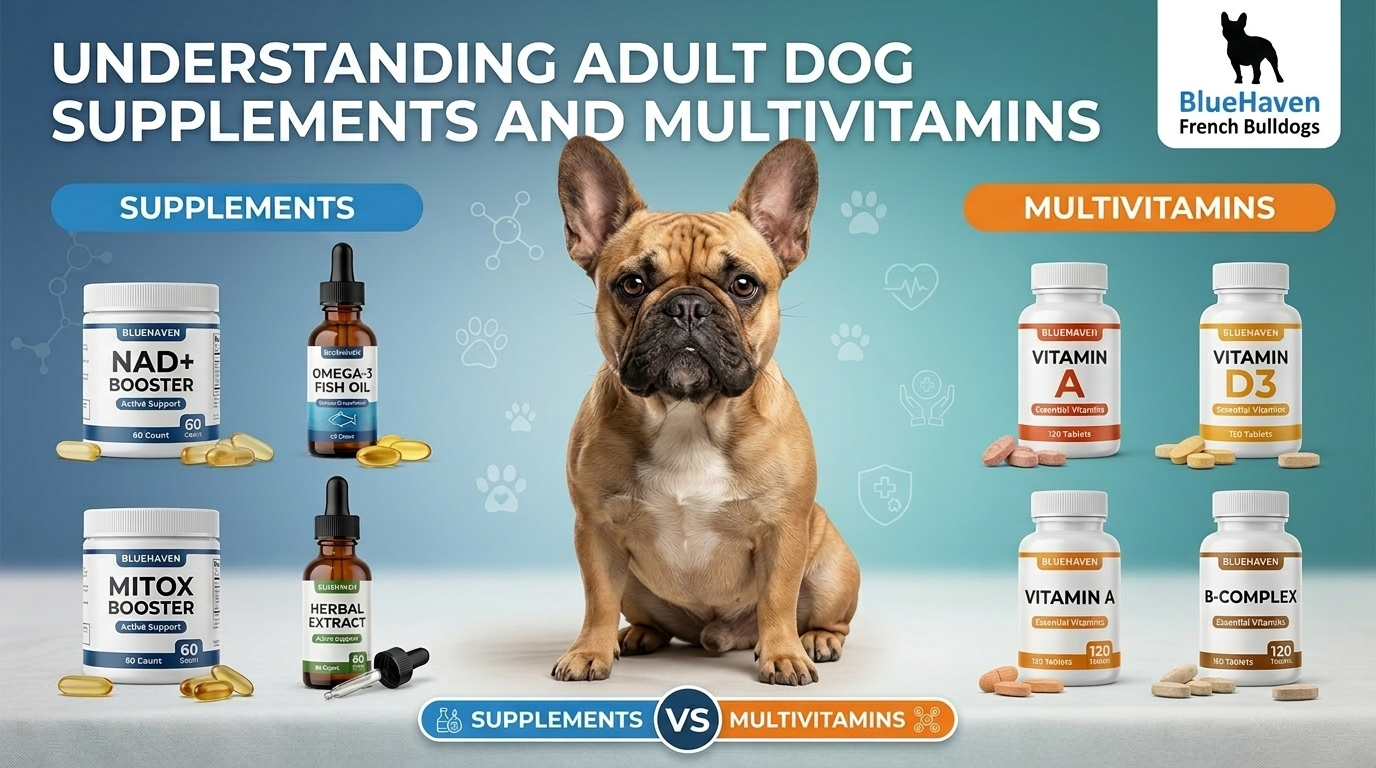
Both supplements and multivitamins are beneficial for the French Bulldog. The main difference is the source and the function. Here is the breakdown of differences between the two.
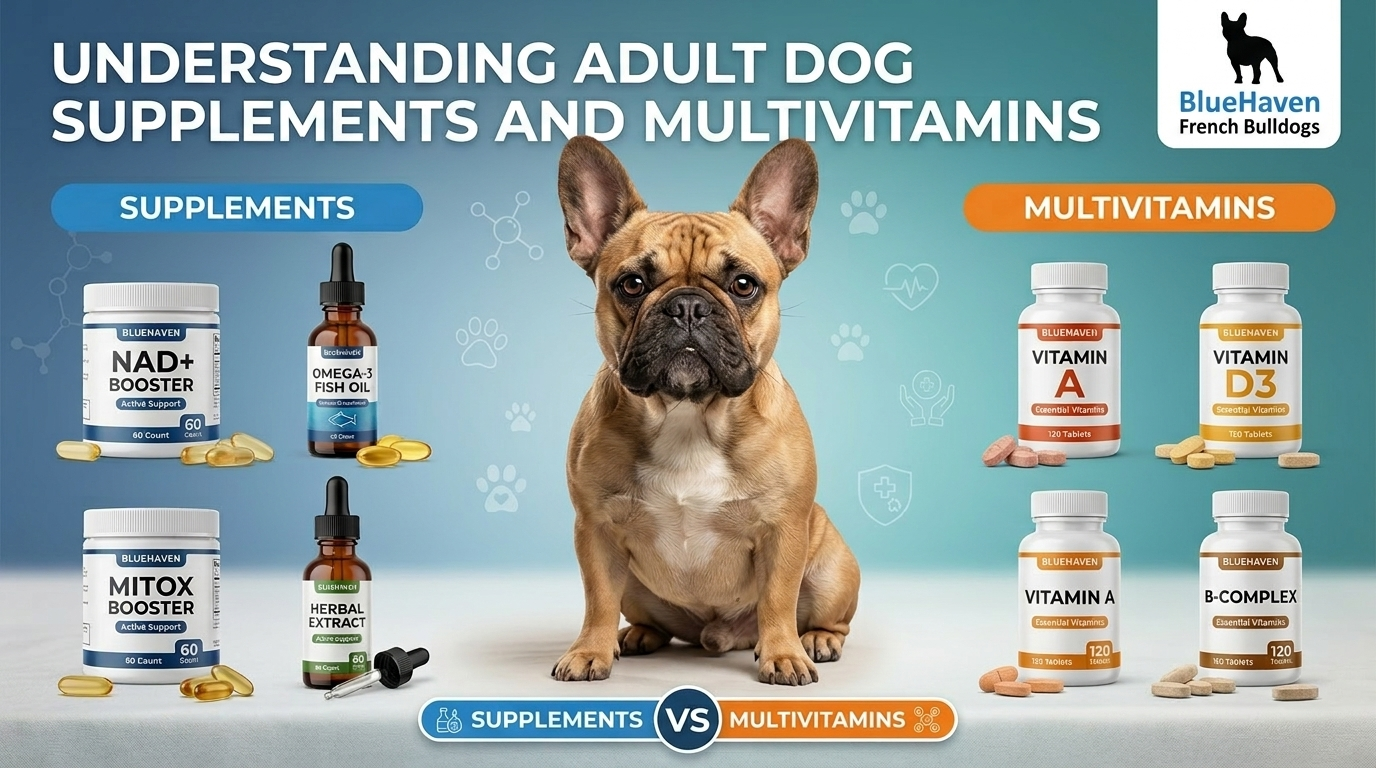
Multivitamins like vitamins C, D, E, and A enhance the bodily processes within the dog’s system. They can also come from real food and complementary food. Meanwhile, supplements have similar functions to multivitamins but are often enhanced.
A supplement like Domitail features enhanced MitoX and Penaditide technologies. Those technologies support the nicotinamide adenine dinucleotide (NAD) metabolism.
Therefore, both multivitamins and supplements are complementary, and you can use both to maintain your French Bulldog’s health—particularly for small breeds and companion dogs such as Frenchies.
NAD, or nicotinamide adenine dinucleotide, is a metabolic system within the dog’s body responsible for some functions. Those are the functions:
NAD is responsible for cell regeneration, especially for adult and senior French Bulldogs. It repairs and replaces damaged cells with new ones. The more effective the system, the more efficient cell regeneration becomes.
Unfortunately, the regeneration process begins to decline once the Frenchie enters adulthood and seniorhood.
Cell degeneration makes the dog significantly different from its prime time. The dog may start getting sick easily, have low stamina, and develop digestive problems. To prevent cell degeneration from going too quickly, an NAD booster supplement will help.
Another function of NAD is to produce energy. If you want to see your dog become energetic, active, and responsive, the NAD system in its body should be in good condition, especially as your Frenchie gets older. A supplement like Domitail will definitely boost the NAD and make your dog more energetic.
Aside from those functions, NAD is also responsible for DNA repair and mitochondrial function.
After discussing supplements for adult dogs, multivitamins also play an important role in keeping your dog in good shape. The older the dog, the more it needs additional multivitamins than it receives from real food. These are the essential vitamins needed for adult French Bulldogs.
The first vitamin crucial for your dog’s health is vitamin D. Vitamin D supports the absorption of calcium and maintains bone strength and joint health. The older the dog, the less able it is to produce and absorb calcium. Therefore, a dose of vitamin D should not be absent from your Frenchie’s diet.
An adult dog typically needs a minimum of 500 IU per kilogram of diet. The need may significantly increase for senior French Bulldogs. Thus, dogs in general need 175 to 750 IU of vitamin D, depending on the food’s vitamin D content.
Another essential vitamin for the dog is vitamin E. It is crucial for skin health, the immune system, and muscle tissue. An early adult dog usually still has a shiny coat and thick fur (depending on the breed).
However, a dog owner should be aware that over the next 2–3 years, it will become coarser as it approaches seniorhood. Therefore, an adult dog should consume a diet containing 50 IU per kilogram.
Vision decline is very common in senior dogs. Once your dog is in adulthood, it is better to supply your dog with sufficient vitamin A. Vitamin A comes naturally from real food like fish and meat.
However, dogs like French Bulldogs with risk factors for vision problems may need a higher vitamin A dose. The daily dose of vitamin A needed by an adult dog is around 330–700 IU. An additional multivitamin may be necessary to maintain sharp vision and alertness.
As the dog gets older, its metabolism slows. This is a natural process because the dog’s body is about to enter a resting stage. The resting stage in seniorhood does not always signal a negative sign.
This sign indicates that the dog needs to conserve more energy to function well daily. To support healthy metabolism, your French Bulldog also needs a daily vitamin B complex.
After talking about multivitamins, we focus on supplements. Supplements are enhanced and based on technology. They may sound more artificial than multivitamins, but they are no less important than the others.
Also, the kind of supplements varies depending on the dogs’ needs. Here are examples of supplements.
NAD Booster is a recently popular supplement highly associated with anti-aging for dogs. Dogs have shorter lifespans than humans, which makes dog owners anxious about not having to spend more time with their beloved dogs.
NAD Booster technology helps regenerate cells, repair DNA, and maintain joint flexibility. An example of an NAD booster is the MitoX technology in Domitail supplements.
Another important supplement that supports coat shine is omega-3 fatty acids. Omega-3 will help to maintain skin health, fur thickness, and a shiny coat. Older dogs like Frenchies may have their fur become coarse, fall out easily, and look less beautiful. With omega-3 support, your French Bulldog can maintain a fit appearance as it ages.
There are also other supplements, such as glucosamine, probiotics, and calming aids, to support your adult dog’s life.
The difference between multivitamins and supplements lies mainly in formulation and technological advancement. Multivitamins usually come from natural sources, while supplements may combine natural and advanced ingredients. Consulting a veterinarian is the best way to determine the right option based on age, lifestyle, and symptoms.
Veterinarian-approved supplements like DomiTail are often recommended, including options available through trusted sources such as BlueHaven French Bulldogs, allowing French Bulldog owners to choose the most suitable variant for their dog’s life stage.
Give your dog the gift of vitality and longevity! Explore the full range of DomiTail supplements today to support their journey into a healthy seniorhood!
_1792608408.jpg)
Best Washable Pee Pads for Dogs: Reusable, Highly Absorbent Picks for 2026 Bringing home a new French Bulldog puppy means plent...
Read More »_1792604232.png)
What Are the Signs of a French Bulldog Tail Pocket Infection, and Why Does It Matter for Puppy Buyers If you are buying a Frenc...
Read More »_1792603645.png)
Adult vs. Puppy French Bulldog: Which Is Right for You? Trying to decide between adult vs. puppy French Bulldogs: which is righ...
Read More »