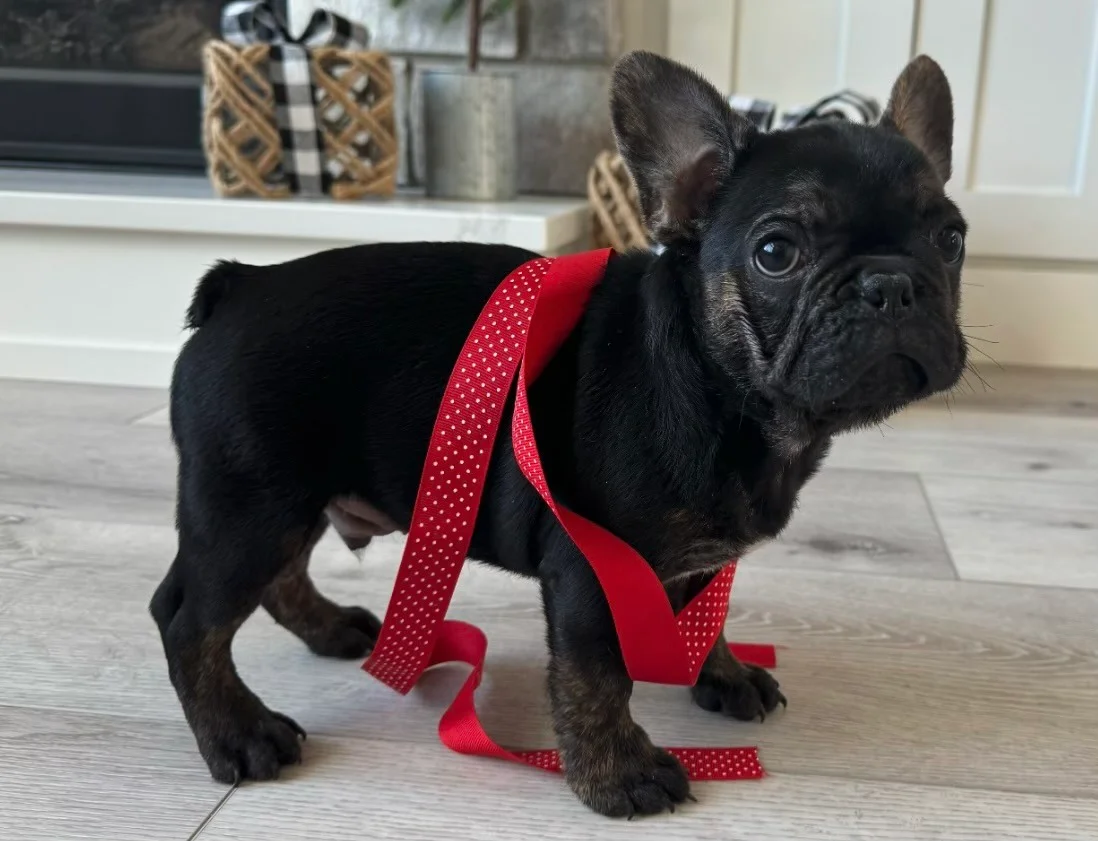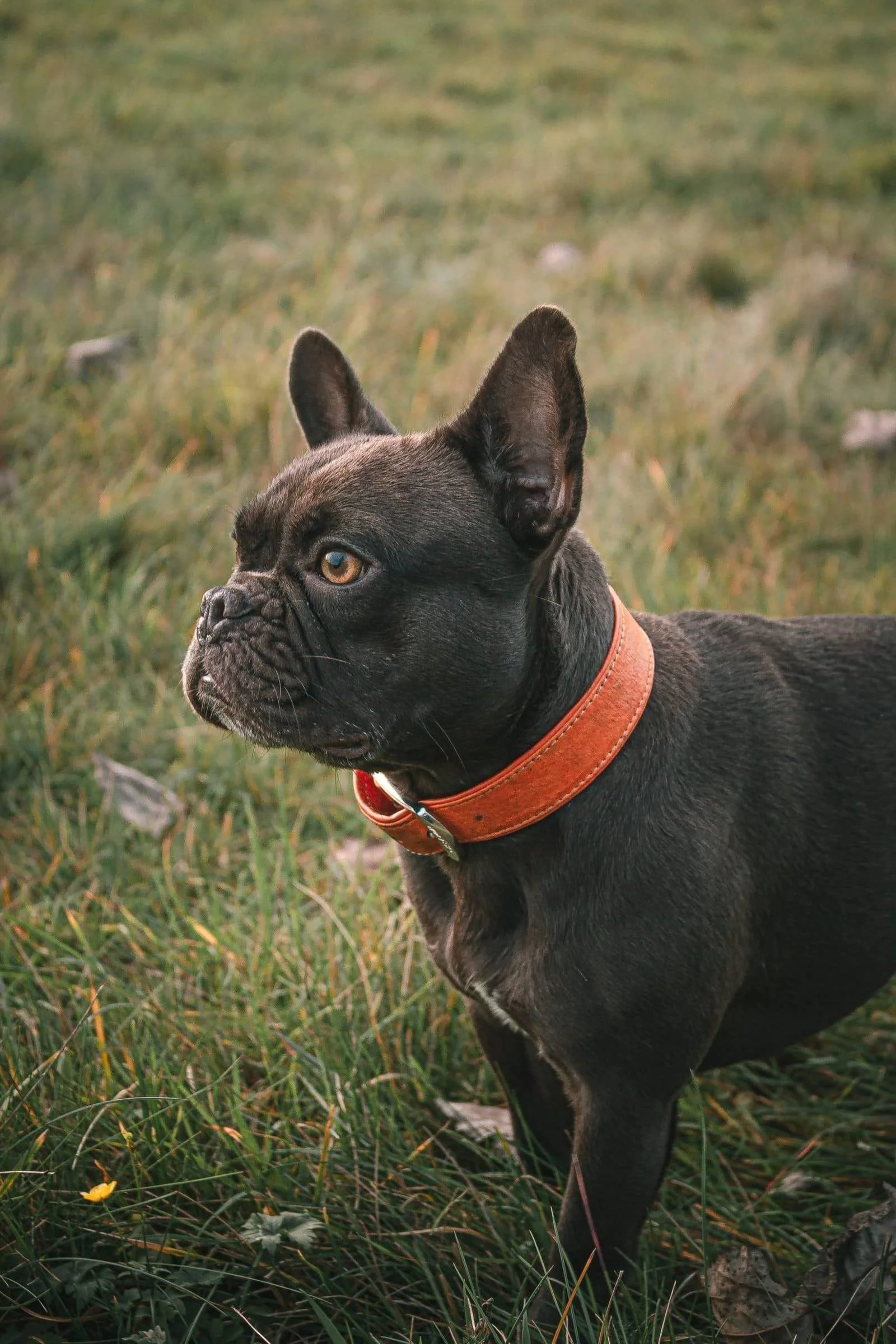

A French Bulldog's tail pocket can trap moisture and debris, making regular cleaning important for maintaining healthy skin. Knowing how to clean a French Bulldog tail pocket correctly helps prevent unnecessary irritation and makes routine grooming easier.
However, using the wrong products or scrubbing too hard can make sensitive skin worse. Gentle cleaning, thorough drying, and regular inspection are essential.
In this guide, BlueHaven French Bulldogs explains four simple cleaning steps, what warning signs to watch for, and when to seek veterinary care. With over 16 years of French Bulldog breeding experience, their multi-generational family team wants new owners to feel prepared to care for their Frenchies.
Before starting, gather a veterinarian-recommended wipe or cleanser and a soft, clean pad or cloth for drying. You should also know what your Frenchie's tail fold normally looks like so you can recognize changes.
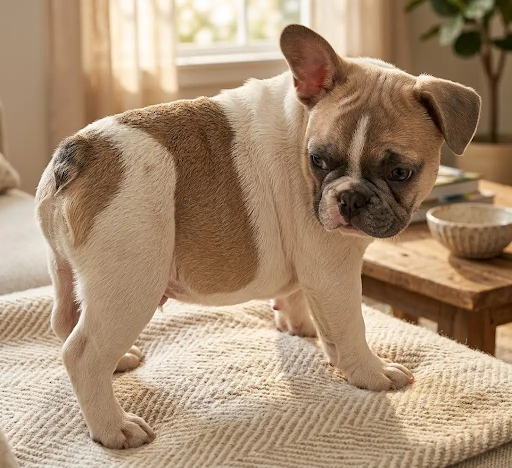
A tail pocket is a skin fold beneath the base of a short or curled tail. Not every French Bulldog has one, but dogs with deeper folds can experience moisture accumulation and skin irritation.
According to MSPCA-Angell's guidance on tailfold intertrigo and screwtail, skin folds can trap moisture and create friction where the skin touches itself. These conditions can contribute to inflammation and infection.
Before establishing a cleaning routine, ask your veterinarian to check whether your Frenchie has a tail pocket and how deep it is. Your veterinarian can also recommend an appropriate cleansing product based on your dog's skin condition.
Cleaning a French Bulldog tail pocket involves four simple steps: lift, clean, dry, and inspect. The goal is to remove accumulated debris without irritating the delicate skin.
Los Angeles Bulldog Vet's tail pocket care guidance also recommends gentle cleaning, thorough drying, and regular inspection. However, the appropriate cleaning frequency depends on the individual dog.
Gently lift your Frenchie's tail to expose the skin fold underneath. Take a moment to inspect the area before cleaning.
Avoid pulling or forcing the tail into an uncomfortable position. Your dog should remain relaxed throughout the process. If lifting the tail causes pain or distress, stop and contact your veterinarian.
Use the wipe or cleanser recommended by your veterinarian to gently clean inside the fold. Avoid rubbing too hard or trying to remove debris by scraping the skin.
McQueen Animal Hospital's guidance on skin fold dermatitis advises against aggressive scrubbing and the use of unsuitable products, including household disinfectants and human skin medications, without veterinary approval.
If the skin appears ulcerated, bleeds, or looks severely inflamed, do not attempt to clean or probe the affected area. Have your veterinarian examine it instead.
After cleaning, gently pat the pocket dry with a soft, clean pad or cloth.
Do not leave moisture trapped inside the fold. Deep skin folds can retain dampness, which contributes to irritation and creates conditions that may encourage microbial growth.
Avoid rubbing the area vigorously. Gentle patting is sufficient for routine drying.
Inspect the tail pocket whenever you clean it. Familiarity with your Frenchie's normal skin condition makes it easier to recognize changes.
Watch for:
Ask your veterinarian how frequently your Frenchie's tail pocket needs attention. Some dogs require more regular care than others, depending on the depth of their folds and their individual skin condition.
Routine cleaning can help maintain skin hygiene, but it cannot replace veterinary treatment when inflammation or infection develops.
Contact your veterinarian if your Frenchie's tail pocket has persistent redness, a strong odor, discharge, swelling, or visible tenderness. Repeated licking, discomfort, and recurring irritation also warrant an examination.
Los Angeles Bulldog Vet explains that home cleaning may help manage tail pocket hygiene but does not replace treatment for an established infection.
The 2025 ISCAID guidelines published in Veterinary Dermatology include skin fold dermatitis among the forms of surface pyoderma in dogs. The guidelines emphasize appropriate veterinary diagnosis, including cytology when indicated, before antimicrobial treatment is selected.
Your veterinarian will determine whether the problem involves simple irritation, an infection, or another skin condition and recommend the appropriate treatment.
Do not start antibiotics, medicated creams, or antiseptic treatments without veterinary guidance.
If your Frenchie has recurring tail pocket problems, ask whether the fold needs additional veterinary management rather than relying on increasingly frequent home cleaning.
Bringing home a French Bulldog involves more than choosing a puppy. New owners also need reliable information about everyday care, veterinary visits, feeding, grooming, and maintaining good hygiene.
BlueHaven French Bulldogs is a multi-generational family breeding program led by Bick and his daughter, Lacey. With over 16 years of French Bulldog breeding experience, the family provides owner resources to help new families prepare for life with their Frenchie.
BlueHaven offers several ways to receive your puppy:
Once your puppy arrives, give them time to settle into their new surroundings before establishing a regular care routine. Arrange an initial veterinary appointment and ask your veterinarian to examine the tail area, determine whether a tail pocket is present, and recommend an appropriate cleaning routine.
Kristen, who welcomed Hank (formerly Robbie) from BlueHaven French Bulldogs, described meeting the puppy nanny at the airport as an easy and smooth experience.
With the right preparation and reliable veterinary guidance, you can feel more confident about caring for your Frenchie as they settle into your home.
A tail pocket is a skin fold beneath the base of a short or curled tail. Deep folds tend to collect moisture, and skin-to-skin contact irritates the skin. Gentle cleaning and thorough drying help, and your veterinarian can show you what a healthy fold looks like.
The answer depends on the dog. Some dogs need only occasional care, while deeper pockets may need a more regular routine. Ask your veterinarian to help you set one for your Frenchie.
Watch for red or pink skin, damp or greasy skin, a strong odor, discharge, swelling, tenderness, hair loss, crusting, and frequent licking, rubbing, scratching, or scooting.
Call your veterinarian if the fold stays irritated, smells unusual, or keeps coming back, because only an exam can tell simple irritation from infection.
Wait until your puppy settles in after pickup or delivery, then follow the four steps. Ask your veterinarian to check the fold at the first visit and to confirm how often to clean it.
You can read the written health guarantee on the BlueHaven French Bulldogs website under Owner Info, in the Contract section. Bick can answer questions by phone or text at 435-770-5708.
Learning how to clean a French Bulldog tail pocket is one part of responsible Frenchie ownership. Gentle cleaning, thorough drying, regular inspection, and timely veterinary care can help you maintain your dog's skin hygiene.
If you are preparing to welcome a Frenchie into your family, BlueHaven French Bulldogs can help you take the next step. The family maintains a waitlist and can help you find the puppy of your dreams soon. High-quality retirees are also available on a regular basis.
Contact BlueHaven French Bulldogs to request your information letter and learn more about the puppies and retirees. Call or text Bick at 435-770-5708, or email [email protected] to get started.
How to Clean a French Bulldog Tail Pocket the Right Way: A Step-by-Step Guide for New Frenchie Owners A French Bulldog's ...
Read More »_1795097910.png)
French Bulldog Puppy vs. Adult Food Cost: Which Stage Fits You? Feeding a French Bulldog involves more than buying a bag of dog...
Read More »_1795024788.png)
5 Warning Signs of Fleas in French Bulldog Puppies Fleas can cause considerable discomfort for a French Bulldog puppy, particul...
Read More »