
_1789490479.png)
Ever watched a French Bulldog run out of steam halfway down the street?
It typically happens the same way every time. You start off the walk feeling good, then heavy panting begins, the pace slows, and someone ends up wheeling 24 pounds of dog home. Owners often mistake their dog's laziness as the problem. Nine times out of ten, it's the gear.
Here's the thing...
A Frenchie isn't simply a tiny brachycephalic dog. The entire physique is different — short airway, heavy chest, low center of gravity. So the collar-and-leash configuration that may work fine on a Yorkie or a Mini Dachshund can place a French Bulldog in real distress.
They're everywhere. The breed ranked America's most popular breed for the fourth consecutive year based on the AKC's 2025 registrations. Millions of walks every day taking place with equipment made for a different type of dog.
Toy breeds are tossed into one category far too much. A 20 lb Frenchie and a 20 lb Beagle could not be more different when leashed up.
Frenchies are brachycephalic. That's a technical term meaning their skull is short and their airway was crushed into a smaller space. Their nostrils are often narrow as well. The soft palate is often too long to fit comfortably in the mouth. Throw in a thick neck and barrel chest and every breath requires more effort than it should for that size dog.
No one sees that effort. One study on breeds showed 60% of owners didn't recognize symptoms of airway issues in dogs who tested positive. Snorting and snuffling are dismissed as "just a Frenchie noise" - when your dog is actually struggling to breathe.
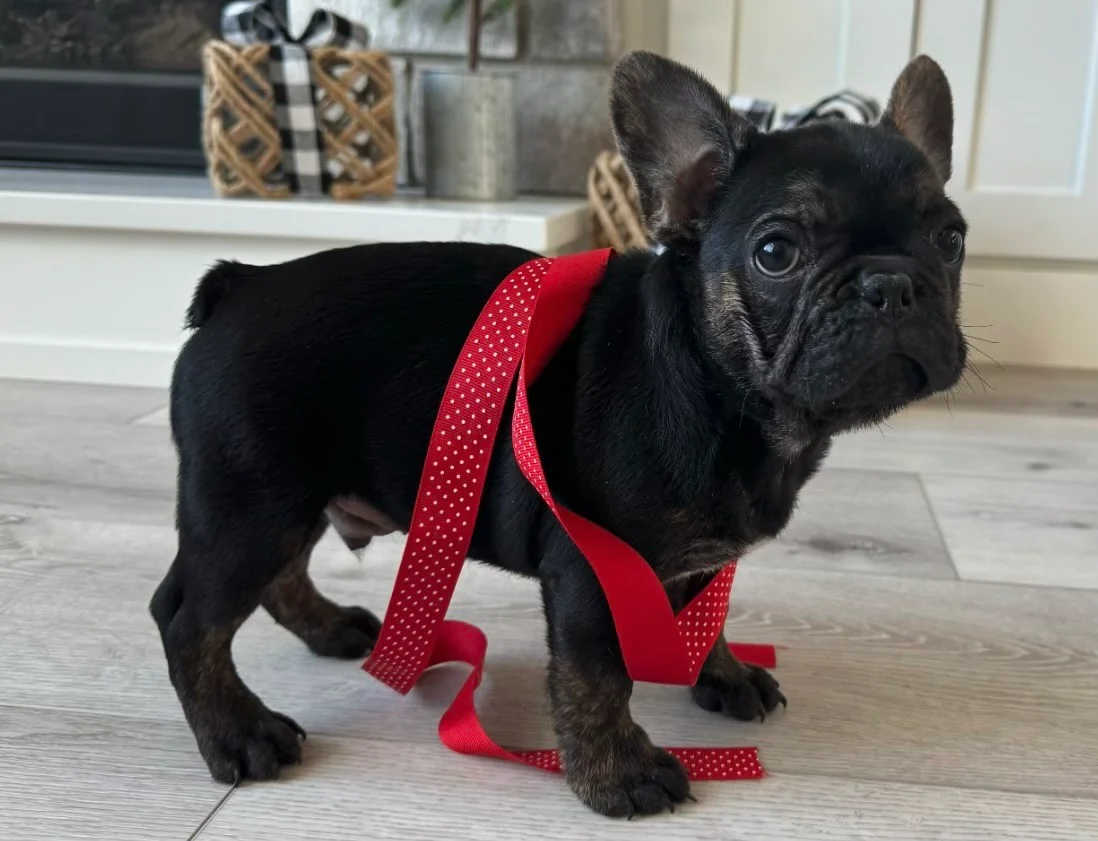
Owners of cream french bulldog puppies notice it early on. The puppy runs in intervals, crashes down, then repeats ten minutes later. This start-stop behavior isn't willfulness. It's a dog regulating its own oxygen.
There's also structure to consider. Frenchies have most of their mass at the front on short legs that sprawl out. Compression on the neck not only crushes the throat -- it pulls their front end off balance.
Which is exactly why the standard small-dog walking kit fails them.
Pretty much any dog pulls at some time. In fact, one study found that 82.7% of owners stated their dog pulls on leash. On a long-nosed breed, that pull is uncomfortable for the dog. On a Frenchie, it lands directly onto a restricted airway.
The same study discovered another finding that should concern every owner of flat-faced dogs. Just wearing a collar while at rest increased eye pressure in brachycephalic dogs. A harness did not.
Standing still. Not pulling. Not running.
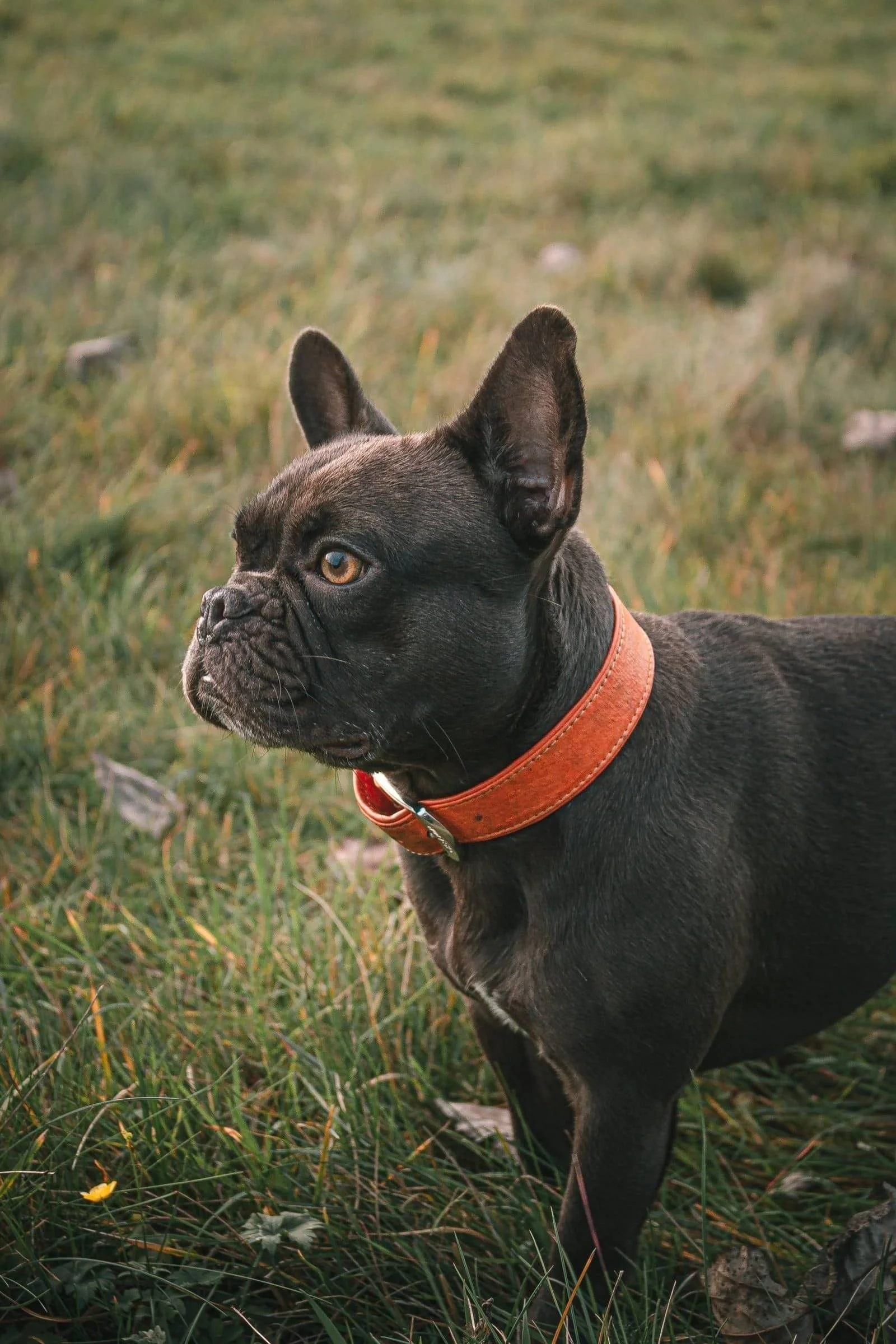
None of that makes collars obsolete. Collars are meant to house the ID and rabies tags, and a tag is still the quickest way home if a gate happens to be open. That's what it was designed to do. Loads of new owners with cream french bulldog puppies pick out cute dog collars for the tags and the pictures, then attach the leash to a harness for all walks. Two pieces of equipment, two jobs that they each do — and the throat doesn't have to get tangled up.
Good news. The fix is cheap and takes about ten minutes to sort out.
The harness is the single biggest upgrade you can make. Look for one that:
Frenchies are notoriously difficult to fit. Since they're built like bricks with legs, a harness sized just by weight will gape at the shoulders or dig in behind the elbows. Measure the chest at its widest and purchase for that measurement.
And skip anything that tightens when the dog pulls.
Retractable leashes inadvertently reward the dog for pulling away with more leash length. Bad news here. When your Frenchie reaches the end of that long leash while barreling full steam ahead, there's a hard jerk straight into his chest.
A leash that is four to six feet keeps the dog nearby and eliminates jerks.
This is the part most people get wrong.
Two or three short walks suit a Frenchie much better than one long trek. 15-20 minutes is enough exercise for an adult dog on a nice day. Keep an eye on your pup - if his breathing becomes heavy or he starts falling behind, it's time to head back home.
Sniffing is exercise also. Allowing a Frenchie to sniff around and investigate the area tires them mentally without stressing their breathing.
A dog pants to cool itself off. A short nose makes that more difficult to do.
Study after study confirms as much. Researchers at the Royal Veterinary College discovered French Bulldogs are six times more likely to experience heat-related illness than Labrador Retrievers, and the leading cause wasn't leaving them in hot cars. It was ... going for walks.
So the weather changes when you walk, not just how.
Heavy laboured breathing, bright red gums, shaky legs or a dog that suddenly sits all indicate stop, seek shade and begin cooling your dog down.
The habits built in the first few months tend to stick for life.
Cream french bulldog puppies should become acquainted with a harness long before they ever see a leash. Allow them to wear it inside, toss them treats with it on, and limit initial sessions to just a few minutes.
Morning walks are kept brief too. A general rule of thumb many veterinarians recommend is five minutes of walking per month of age, twice daily — puppy joints aren't fully developed either. Purchasing equipment for your cream french bulldog puppy? Get adjustable, and plan on going up two sizes before your pup's first birthday.
Teach loose-leash walking now, while pulling still can't hurt anybody.
Frenchies need a modified walking plan because they ARE a different dog. Short airway, heavy front end, inefficient cooling system- none of these issues are overcome by working harder.
Quick recap:
Hit on all fours and your walk stops being a struggle on both ends.
_1792608408.jpg)
Best Washable Pee Pads for Dogs: Reusable, Highly Absorbent Picks for 2026 Bringing home a new French Bulldog puppy means plent...
Read More »_1792604232.png)
What Are the Signs of a French Bulldog Tail Pocket Infection, and Why Does It Matter for Puppy Buyers If you are buying a Frenc...
Read More »_1792603645.png)
Adult vs. Puppy French Bulldog: Which Is Right for You? Trying to decide between adult vs. puppy French Bulldogs: which is righ...
Read More »